

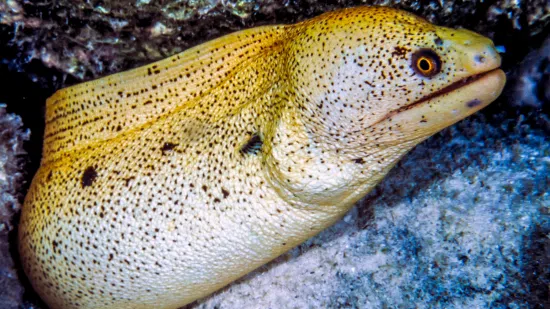

Eels In Saltwater Aquariums: FAQ
Saltwater eels (especially popular species like snowflake eels, zebra morays, and chainlink eels) are strict carnivores that thrive on a protein-rich diet designed to mimic their natural hunting habits. In the wild, moray eels feed on crustaceans, mollusks, and small fish. In captivity, providing the right foods is essential for maintaining strong immune systems, healthy growth, and predictable behavior.
Best staple foods for saltwater eels:
Frozen and fresh meaty foods (primary diet)
Silversides (whole or chopped, depending on eel size)
Shrimp (raw, shell-on is ideal for dental health)
Squid and octopus
Scallops and clams
These foods closely match natural prey and are readily accepted by most eels.
Crustaceans (highly recommended)
Snowflake and zebra morays, in particular, prefer crunchy foods:
Raw shrimp
Crab pieces
Lobster or crayfish tail
Shell-on foods help prevent jaw and tooth issues over time.
Occasional enrichment foods:
Live ghost shrimp (use sparingly)
Fresh fish fillet (marine-sourced only)
Live foods are not required but can help newly acclimated or picky eels begin feeding.
Foods to avoid:
Freshwater feeder fish (poor nutrition, disease risk)
Processed or seasoned seafood
Flake or pellet foods (most eels will ignore them)
One Saltwaterfish.com reviewer of the Snowflake Eel shared: “Once you put them in the tank, keep your hands out of it. They will eat anything they can get their mouth on.”
Feeding tips for eel success:
Feed 2–3 times per week, not daily
Use feeding tongs to avoid bites and encourage proper feeding response
Thaw frozen foods completely and rinse before feeding
Offer appropriately sized portions to prevent regurgitation
- Maintain excellent filtration, eels are messy eaters
Bottom line:
The best foods for saltwater eels are meaty marine-based options like shrimp, squid, silversides, clams, and crab, with shell-on foods playing an important role in long-term health. With proper feeding frequency and variety, saltwater eels are hardy, long-lived predators that thrive in home aquariums. For healthy, tank-conditioned saltwater eels backed by Saltwaterfish.com’s 8-Day Live Guarantee, explore the Eel Collection and feed your predator with confidence.
Saltwater eels should be fed 2–3 times per week, not daily. Unlike many reef fish, moray eels have slow metabolisms and are adapted to eating larger meals less frequently. Overfeeding is one of the most common mistakes eel keepers make and can lead to poor water quality, regurgitation, or long-term health issues. When fed on the correct schedule, saltwater eels are hardy, predictable, and long-lived aquarium inhabitants.
Why eels don’t need daily feeding:
In the wild, moray eels hunt opportunistically and may go several days between meals. Their digestive systems are designed for large, protein-rich feedings followed by rest, not constant grazing. Feeding too often does not make eels grow faster or become healthier, it usually creates excess waste and stress.
Recommended feeding frequency by eel size:
Juvenile eels:
Feed 2–3 times per week
Smaller portions, appropriately sized to the eel’s mouth
Adult eels:
Feed 1–2 times per week
Larger, meaty portions
Large species (zebra, chainlink, green morays):
Often thrive on once-weekly feedings once established
Signs your eel is being fed correctly:
Maintains a thick, muscular body
Strong feeding response
Does not regurgitate food
Stable water quality
Signs of overfeeding:
Regurgitated food
Excessive waste and rising nitrates
Sluggish behavior
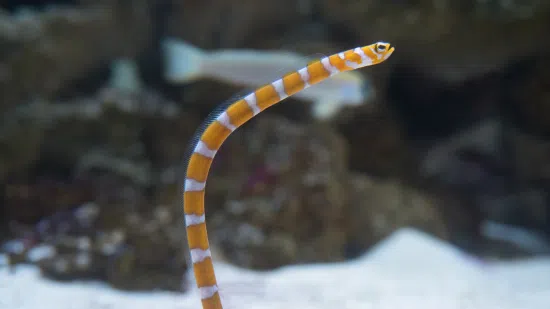
One Saltwaterfish.com reviewer of the Black Ribbon Eel shared: “Good price, fast shipment of my Black Ribbon Eel.”
Pro feeding tips for saltwater eels:
Use feeding tongs to prevent accidental bites
Offer marine-based foods only (shrimp, squid, silversides, crab)
Feed at the same time of day to build routine
Remove uneaten food promptly
- Strong filtration is essential, eels are messy eaters
Bottom line:
Saltwater eels should be fed 2–3 times per week, with larger adults often needing even less frequent meals. Proper feeding frequency keeps eels healthy, reduces waste, and supports long-term success. For healthy, tank-conditioned saltwater eels backed by Saltwaterfish.com’s 8-Day Live Guarantee, explore the Eel Collection and care for your predator with confidence.
Saltwater eels are reef safe with caution. This means they are completely safe with corals, but not always safe with invertebrates or small fish. Understanding this distinction is critical before adding an eel to a mixed reef tank. When chosen carefully and housed appropriately, many aquarists successfully keep eels in coral-focused systems, but they are not a universal fit for every reef.
Why eels are coral-safe:
Saltwater eels, including popular species like Snowflake Eels, Zebra Morays, and Chainlink Eels, are carnivorous predators that hunt by scent, not by grazing or picking.
They do not nip, sting, or damage corals
Safe with SPS, LPS, soft corals, zoanthids, and anemones
Ignore stationary coral tissue entirely
From a coral-health perspective, eels are among the safest large predators you can keep.
Where caution is required:
Invertebrates are at risk
Most eels naturally eat crustaceans and mollusks. In a mixed reef, this can include:
Cleaner shrimp
Peppermint shrimp
Crabs and hermits
Snails (especially smaller species)
Snowflake and zebra eels are particularly known for hunting crustaceans.
Small fish may be vulnerable
While eels are not aggressive swimmers, they may eat:
Very small fish
Fish that sleep in rockwork
Slow or bottom-dwelling species
Tank size and stability matter
Eels require secure rockwork, tight lids, and strong filtration. Poorly secured aquascapes or uncovered tanks increase risk.
One Saltwaterfish.com reviewer of the Green Wolf Eel shared: “Beautiful Green Wolf Eel swims in out of the rock formation in the saltwater fish tank. Healthy and energetic after acclimation.”
Pro tips for keeping eels in mixed reefs:
Choose Snowflake or Zebra Eels for the best reef compatibility
Avoid decorative shrimp-heavy reefs
Feed appropriately to reduce hunting behavior
Secure all lids, eels are escape artists
- Provide caves and stable rockwork
Bottom line:
Saltwater eels are reef safe with corals but not invertebrate-safe, making them best suited for fish-focused or coral-dominant mixed reefs without ornamental shrimp or small crabs. With proper planning, they can coexist beautifully with corals while adding dramatic presence to your aquarium. For healthy, tank-conditioned saltwater eels backed by Saltwaterfish.com’s 8-Day Live Guarantee.
Saltwater eels are often labeled as aggressive, but that description is misleading. They are not aggressive fish, they are opportunistic predators, and understanding that distinction is key to successful tank planning.
Unlike territorial fish that chase, harass, or bully tankmates, most saltwater eels spend the majority of their time hidden in rockwork. They do not actively patrol territory or attack healthy, appropriately sized fish. Instead, they rely on scent-based ambush feeding. This means compatibility issues are almost always related to prey size and sleeping behavior, not aggression.
Pick the right tank mates
Fish that are too large to fit in an eel’s mouth and that remain active in open water are typically ignored. Tangs, angelfish, large wrasses, and similar species coexist peacefully with eels in many established aquariums. Problems arise when small, slow, or bottom-sleeping fish are introduced. These fish may be eaten opportunistically, even in well-fed systems.
Feeding frequency does not eliminate predatory instincts. A well-fed eel is less motivated to hunt, but instinctual behavior remains. This is why tankmate selection should always be based on adult size and behavior, not juvenile appearance.
Bottom line:
Saltwater eels are not aggressive fish, but they are opportunistic predators. With properly sized tankmates, adequate feeding, and a secure environment, eels coexist peacefully in community and predator tanks. For healthy, tank-conditioned saltwater eels backed by Saltwaterfish.com’s 8-Day Live Guarantee, explore the Eel Collection and choose a species that fits your aquarium with confidence.
Saltwater eels (most commonly moray eels) can grow anywhere from 24 inches to well over 6 feet in captivity, depending on the species. Size is one of the most important factors to understand before purchasing an eel, because it directly impacts tank size, filtration needs, compatibility, and long-term success. While many eels are sold as small juveniles, they do continue to grow steadily over time in home aquariums.
Typical adult sizes of popular saltwater eels:
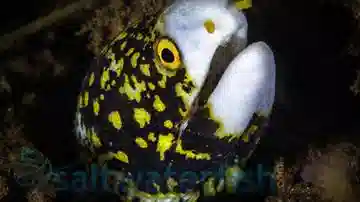
Snowflake Eel (Echidna nebulosa)
Adult size: 24–30 inches
One of the most popular home aquarium eels
Suitable for tanks 75 gallons and larger
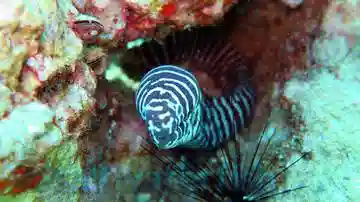
Zebra Moray Eel (Gymnomuraena zebra)
Adult size: 36–48 inches
Thick-bodied but slower growing
Requires 125+ gallons long term
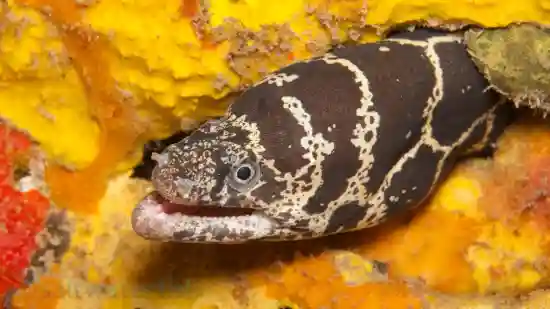
Chainlink Eel (Echidna catenata)
Adult size: 30–36 inches
Hardy and adaptable
Best in 90–125+ gallon tanks
Green Moray Eel (Gymnothorax funebris)
Adult size: 6–8 feet
Not suitable for most home aquariums
Requires very large, specialized systems
Why captive size matters:
Eels grow longer than most fish and need horizontal space, not just volume
Larger eels produce significant waste and require strong filtration
Tank size affects temperament and feeding behavior
Under-sized tanks lead to stress, escape attempts, and poor health
One Saltwaterfish.com reviewer of the Zebra Eel shared: “Great size, color, and very healthy. Eating shrimp on the first day\! Very happy with this purchase.”
Pro tips for planning around eel size:
Plan for adult size, not current size
Choose species appropriate for your tank length
Secure all lids, larger eels are powerful escape artists
Provide deep caves and stable rockwork
- Avoid overstocking with other large predators
Bottom line:
Saltwater eels range from 2–3 feet to over 6 feet in captivity, depending on species. Popular options like Snowflake and Chainlink Eels are manageable in large home aquariums, while giant species like Green Morays are not. For responsibly sourced, tank-conditioned saltwater eels backed by Saltwaterfish.com’s 8-Day Live Guarantee, explore the Eel Collection and choose a species that fits your system for the long term.
Yes, you can keep multiple saltwater eels together, but it requires careful planning, the right species, and adequate tank size. While moray eels are not highly aggressive by nature, they are territorial predators, and poor setup choices are the main reason hobbyists run into problems. When done correctly, multi-eel tanks can be stable, fascinating displays that work very well long term.
*When keeping multiple eels can work:
Large tank size is essential
Tank size is the single most important factor.
Minimum: 125 gallons for two smaller eels
Recommended: 180–300+ gallons for long-term success
Eels need horizontal space, multiple caves, and enough room to establish separate territories.
Compatible species combinations
Some species coexist better than others:
Snowflake Eels with Snowflake Eels
Snowflake Eels with Zebra Morays
Chainlink Eels with Snowflake Eels
Avoid mixing vastly different sizes or highly aggressive species.
Multiple hiding places
Each eel must have its own cave or burrow. Competition for hiding spots is a common trigger for stress and conflict.
Proper feeding reduces tension
Well-fed eels are far less likely to compete aggressively. Feeding with tongs helps ensure each eel gets food without accidental bites.
*When multiple eels are not recommended:
Tanks under 125 gallons
Mixing very large species (e.g., Green Morays) with smaller eels
Introducing a second eel much later into an established territory
- Tanks without enough rockwork or caves
While eels rarely fight outright, size dominance and food competition can become issues in cramped systems.
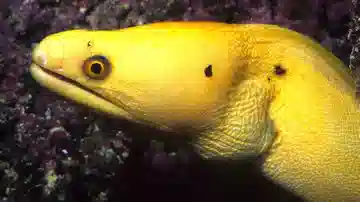
One Saltwaterfish.com reviewer of the Yellow Head Moray Eel shared: “The yellow headed moray eel arrived in excellent condition. Eating thawed shrimp on a daily basis. It is very active at night and gets along with my dwarf yellow eel that i also bought from here as well.”
Bottom line:
Multiple saltwater eels can live together successfully in large, well-structured tanks with compatible species and proper feeding routines. With the right setup, they coexist peacefully and create a dramatic predator display. For healthy, tank-conditioned saltwater eels backed by Saltwaterfish.com’s 8-Day Live Guarantee, explore the Eel Collection and plan your multi-eel system with confidence.
Saltwater eels are hardy predators, but when something is wrong in their environment, they often show clear behavioral and physical signs of stress. Because moray eels are naturally secretive and sedentary, stress is sometimes overlooked until it becomes serious. Learning to recognize early warning signs allows you to correct issues before they lead to illness, refusal to eat, or escape attempts.
Common signs of stress in saltwater eels:
Loss of appetite or refusal to feed
One of the earliest and most reliable indicators.
Healthy eels eat eagerly when food is offered
Skipping one feeding can be normal, but repeated refusal is not
Stress-related appetite loss is often tied to water quality, temperature swings, or tankmate issues.
Excessive hiding or abnormal inactivity
While eels do hide naturally, a stressed eel may:
Remain hidden for weeks at a time
Stop repositioning within its cave
Show little response to feeding cues
Frequent escape attempts
Eels trying to climb out of the tank or pushing against lids are often reacting to:
Poor water quality
Inadequate hiding spaces
Aggressive tankmates
This is a major red flag that something in the system needs attention.
Rapid or labored breathing
Heavy breathing or constantly open mouths outside of feeding time can indicate:
Low oxygen levels
High ammonia or nitrite
Temperature stress
Visible weight loss or thin body profile
Healthy eels appear thick and muscular. A stressed eel may look pinched behind the head or noticeably thinner over time.
One Saltwaterfish.com reviewer of the Snowflake Eel shared: “Our Snowflake Eel arrived several weeks ago. It was in great health through a brief acclimation period and adjust to the tank immediately. It is a feisty eater but initially did not compete for food well \- but through a little patience and additional feeding, it has learned to hang on to the food we give it. We love our new addition to the community and our new snowflake Eel is doing well. I highly recommend saltwaterfish.com as they do a great job of handling and shipping of livestock.”
Most common causes of eel stress:
Poor or unstable water quality
Overcrowding or incompatible tankmates
Insufficient caves or rockwork
Overfeeding or underfeeding
Insecure lids or excessive disturbance
Pro tips to reduce eel stress:
Maintain stable salinity and temperature
Provide multiple deep caves
Feed 2–3 times per week with proper portions
Use strong filtration and good oxygenation
- Secure all lids tightly
Bottom line:
Signs of stress in saltwater eels include loss of appetite, excessive hiding, escape attempts, rapid breathing, and weight loss. These behaviors are signals, not personality traits. When water quality, tank size, feeding routine, and shelter are dialed in, eels are calm, predictable, and long-lived. For healthy, tank-conditioned saltwater eels backed by Saltwaterfish.com’s 8-Day Live Guarantee, explore the Eel Collection and keep your predator thriving with confidence.
Saltwater eels, most commonly moray eels, are among the longest-lived fish regularly kept in home aquariums. With proper care, many saltwater eels live 10–20 years in captivity, and some well-documented individuals have exceeded 25 years in large, stable systems. Their longevity makes them a serious long-term commitment but also one of the most rewarding predator fish to keep.
Typical lifespans of common saltwater eels:
Snowflake Eel (Echidna nebulosa): 10–15+ years
Chainlink Eel (Echidna catenata): 12–18 years
Zebra Moray Eel (Gymnomuraena zebra): 15–20+ years
Green Moray Eel (Gymnothorax funebris): 20+ years (very large systems only)
These lifespans are achievable in captivity because eels face no predators, consistent feeding, and stable conditions, provided the tank is set up correctly.
What most affects an eel’s lifespan in an aquarium:
Tank size and structure
Eels need room to stretch out fully, secure caves, and stable rockwork. Undersized tanks lead to chronic stress and shortened lifespans.
Water quality and stability
While eels are hardy, long-term success depends on:
Stable salinity (1.024–1.026)
Consistent temperature (75–78°F)
Strong filtration and oxygenation
Proper feeding routine
Feeding 2–3 times per week with marine-based, meaty foods prevents obesity, regurgitation, and water quality issues.
Secure lids and safety
Escape attempts are one of the most common causes of premature eel loss. Tight-fitting lids are non-negotiable.
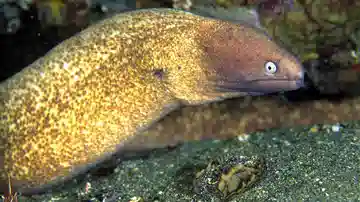
One Saltwaterfish.com reviewer of the Banded Moray Eel shared: “I've had Banded Moray Eel for about a week and he's doing great. For the first few days I didn't see him at all, but now he makes appearances pecking at algae and darting in and out of the rocks and caves. Nice colors and appears healthy.”
Pro tips for maximizing eel lifespan:
Plan for adult size before purchasing
Avoid overcrowding with other predators
Maintain excellent filtration
Use feeding tongs to prevent injury
Keep rockwork stable and caves abundant
Bottom line:
Saltwater eels are exceptionally long-lived aquarium fish, often thriving for 10–20+ years when cared for properly. Their durability, intelligence, and longevity make them ideal for aquarists looking for a true long-term centerpiece. For healthy, tank-conditioned saltwater eels backed by Saltwaterfish.com’s 8-Day Live Guarantee, explore the Eel Collection and invest in a marine animal you can enjoy for decades.
Yes, there are smaller, more manageable saltwater eel species that are often referred to as “dwarf” or small moray eels, but it’s important to set realistic expectations. Even dwarf eels are not nano-tank fish, and “small” in eel terms still means planning for proper space, filtration, and long-term care. When chosen correctly, however, these species can work well in medium-sized home aquariums and are among the most popular eels in the hobby.
Best dwarf or smaller eel species for home aquariums:
*Snowflake Eel (Echidna nebulosa)
This is the most commonly recommended “small” eel.
Adult size: 24–30 inches
Minimum tank size: 75 gallons
Hardy, adaptable, and beginner-friendly (for eel keepers)
Prefers crustaceans over fish
Chainlink Eel (Echidna catenata)
Another excellent option for hobbyists wanting a smaller eel.
Adult size: 30–36 inches
Minimum tank size: 90 gallons
Calm temperament and predictable behavior
*Golden Dwarf Moray (Gymnothorax melatremus)
The true dwarf eel species, but rare and advanced.
Adult size: 10–12 inches
Minimum tank size: 30–40 gallons
Extremely secretive and harder to feed
Best for experienced aquarists
Important reality check:
There are no truly nano-safe eels. Even dwarf species require:
Tight-fitting lids (escape risk)
Strong filtration
Secure rockwork with caves
- Proper feeding routines
One Saltwaterfish.com reviewer of the Snowflake Eel shared: “Active and feeding, nice addition to my tank.”
Bottom line:
While there are no true nano eels, species like the Snowflake Eel, Chainlink Eel, and the rare Golden Dwarf Moray are the best options for smaller or medium-sized aquariums. With proper planning, these eels are hardy, fascinating, and long-lived additions. For healthy, tank-conditioned saltwater eels backed by Saltwaterfish.com’s 8-Day Live Guarantee.
Preventing eel escapes is less about restraint and more about environmental security. Saltwater eels are not trying to “get out”, they are exploring for safety. When their needs are met and physical gaps are sealed, escape attempts stop.
Eels instinctively search for tight, enclosed spaces. In nature, this means reef crevices. In captivity, it means any opening that looks like shelter. Even small gaps around lids, plumbing, or overflows can trigger exploratory behavior, especially at night.
Always keep a fully sealed lid on your tank
The most important preventive measure is a fully sealed lid. This includes covering corners, hinge gaps, overflow teeth, and return line openings. Mesh lids must use very fine mesh, as eels can push through surprisingly small spaces. If a head fits, the eel fits.
Make sure your eels feel safe
Just as important is internal security. Eels that lack deep, stable caves feel exposed and are far more likely to roam. Providing multiple snug hiding spots dramatically reduces wandering behavior. Stable water parameters also matter. Sudden changes in temperature, salinity, or oxygen often trigger escape attempts.
Don’t Overfeed
Feeding plays a secondary role. Hungry eels explore more, but overfeeding causes water quality stress, which also increases escape behavior. Balanced feeding and environmental stability work together.
One Saltwaterfish.com reviewer of the Zebra Eel shared: “Every living saltwater anything I’ve bought from this place is top notch. This Eel was perfectly shipped to me and the Eel was very active right out of the box. It seems they took every precaution possible to assure a proper transit. Definitely worth buying from this store\!”
Bottom line:
Preventing eel escapes comes down to a fully sealed lid, protected overflows, secure rockwork, and stable tank conditions. When eels feel safe and contained, they stop trying to leave. For healthy, tank-conditioned saltwater eels backed by Saltwaterfish.com’s 8-Day Live Guarantee, explore the Eel Collection and keep your predator secure, thriving, and exactly where it belongs.
While all saltwater eels are predators by nature, some species are far more peaceful, predictable, and community-compatible than others. These eels are best described as non-aggressive ambush feeders rather than active hunters, making them suitable for fish-focused community or mixed reef tanks when chosen carefully. The key is selecting species that prefer crustaceans over fish and pairing them with appropriately sized tank mates.
Most peaceful eel species for community aquariums:
*Snowflake Eel (Echidna nebulosa)
The most popular and widely recommended community eel.
Feeds primarily on crustaceans, not fish
Calm, slow-moving, and predictable
Rarely shows aggression toward healthy, medium-to-large fish
Excellent choice for first-time eel keepers
Zebra Moray Eel (Gymnomuraena zebra)
One of the most docile large eels available.
Blunt teeth designed for crushing shells, not fish
Extremely peaceful toward tankmates
Slow, deliberate feeder
Requires a larger tank but very stable temperament
Chainlink Eel (Echidna catenata)
Another solid option for community predator tanks.
Similar behavior to snowflake eels
Generally ignores fish that are too large to swallow
Hardy and adaptable
*Golden Dwarf Moray (Gymnothorax melatremus)
Peaceful but advanced.
Very small adult size
Extremely secretive
Best for experienced aquarists with secure systems
Why these eels work in community tanks:
Prefer crustaceans over fish
Spend most of their time in caves
Do not actively chase tankmates
Low territorial aggression
One Saltwaterfish.com reviewer of the Tesselata Eel shared: “A gorgeous healthy Tesselata Eel. Arrived quickly and adapted quickly. Likes to hang out with my Mimic Tang. I purchased three different species and everyone is doing well\!”
Tank mates that pair well with peaceful eels:
Tangs and surgeonfish
Angelfish
Large wrasses
Triggerfish (species-dependent)
Lionfish (with caution and space)
Tank mates to avoid:
Very small fish
Bottom-sleeping species
Ornamental shrimp and crabs
Bottom line:
The most peaceful eel species for community tanks include Snowflake Eels, Zebra Morays, and Chainlink Eels. When paired with appropriately sized fish and housed in secure, stable systems, these eels coexist calmly and add dramatic presence without aggression. For healthy, tank-conditioned saltwater eels backed by Saltwaterfish.com’s 8-Day Live Guarantee, explore the Eel Collection and choose a species that fits your community tank with confidence.
Proper acclimation is critical when introducing a new saltwater eel to your aquarium. While moray eels are hardy once established, they are extremely sensitive to sudden changes in temperature, salinity, and stress during introduction. A calm, methodical acclimation process dramatically increases feeding response, reduces escape attempts, and sets the stage for long-term success.
Step-by-step eel acclimation process:
1\. Prepare the tank before arrival
Before the eel arrives, ensure:
Stable salinity (1.024–1.026)
Temperature between 75–78°F
Secure lid with all gaps sealed
Multiple dark caves already in place
Eels should never be introduced into a tank that’s still being adjusted.
2\. Temperature acclimation (15–20 minutes)
Float the unopened bag in your tank or sump to equalize temperature. Keep the lights dim to reduce stress.
3\. Slow salinity acclimation (20–40 minutes)
Once temperatures match:
Place the eel and shipping water into a bucket or container
Slowly drip tank water into the container
Aim for 2–4 drops per second
This helps the eel safely adjust to differences in salinity and pH.
4\. Gentle transfer (never use a net)
Eels should never be netted.
Use a container or allow the eel to slide out gently
Do not pour shipping water into the tank
5\. Lights off and no feeding for 24 hours
Allow the eel to find a cave and settle in. Feeding immediately can increase stress and regurgitation.
One Saltwaterfish.com reviewer of the Snowflake Eel shared: “Very thick & healthy specimen.”
Pro acclimation tips for eels:
Keep the room quiet during introduction
Cover the tank completely before opening the lid
Expect hiding behavior for the first few days
Offer the first feeding after 24–48 hours
Use feeding tongs for safety and consistency
Bottom line:
Successful eel acclimation comes down to slow temperature and salinity adjustment, gentle handling, and a stress-free environment. When introduced properly, saltwater eels settle quickly, begin feeding reliably, and thrive for many years. For healthy, tank-conditioned saltwater eels backed by Saltwaterfish.com’s 8-Day Live Guarantee, explore the Eel Collection and introduce your new eel with confidence.