

Groupers In Saltwater Aquariums: FAQ
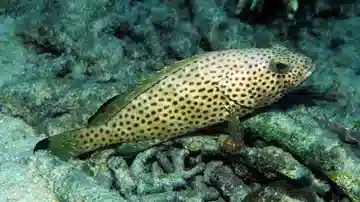
No, groupers are not reef safe, and they’re best kept in predator-focused or FOWLR aquariums rather than mixed reef tanks. Even though groupers usually won’t “pick at” coral tissue, a reef tank is a bad fit because groupers are built to eat mobile livestock and physically dominate the environment as they mature.
The biggest issue is predation by mouth size. Groupers are suction-feeding ambush predators, and anything that can fit in their mouth is eventually at risk: fish, shrimp, crabs, snails, and other invertebrates. Many “reef-safe” situations only appear safe temporarily because the grouper is still juvenile.
The second issue is system compatibility. Groupers are heavy-bodied fish that eat meaty foods and produce significant waste. That combination makes it harder to keep the low-nutrient stability many coral systems require, especially SPS-dominant reefs.
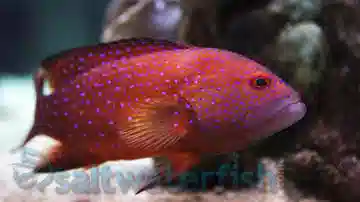
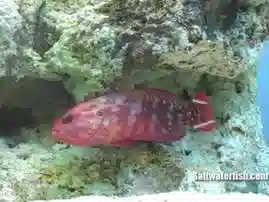
One Saltwaterfish.com reviewer of the Miniatus Grouper shared: “Very nice reef fish. Miniatus Grouper cleans detritus in the live rock. Doesn't intrude on the reef. Easy keeper.”
Bottom line: groupers don’t belong in typical reef tanks. They shine in large, well-filtered predator or FOWLR systems where their feeding behavior and size are expected, not disruptive.
Groupers are carnivorous, protein-heavy predators that require a diet closely matched to what they eat on natural reefs. In captivity, feeding the right foods is essential not only for growth and coloration, but also for long-term health, immune strength, and predictable behavior. When fed properly, groupers are hardy, enthusiastic eaters that adapt very well to aquarium life.
Best foods for groupers in captivity:
Frozen and fresh marine meaty foods (primary diet)
These should form the foundation of a grouper’s diet:
Silversides (whole or chopped, size-dependent)
Shrimp (raw, marine-sourced; shell-on is beneficial)
Squid and octopus
Scallops and clam meat
These foods closely replicate natural prey and are readily accepted by most species.
Prepared foods (for trained or tank-conditioned groupers)
Many captive-conditioned groupers learn to accept high-quality prepared foods:
Large marine pellets
Soft sinking predator pellets
Prepared foods add convenience and nutritional consistency but should not completely replace whole meaty items.
Occasional enrichment foods:
Chunks of marine fish fillet (saltwater species only)
Crabs or crustacean pieces (species-dependent)
Live feeder fish are not recommended due to disease risk and poor nutritional value.
Foods to avoid:
Freshwater feeder fish (goldfish, minnows)
Processed or seasoned seafood
Overly fatty foods used too frequently
How often should groupers be fed?
Juveniles: 3–4 small meals per week
Adults: 2–3 meals per week
Overfeeding leads to obesity, water quality issues, and reduced lifespan.
One Saltwaterfish.com reviewer of the Polleni Grouper shared: “Polleni Grouper Great addition to 28g Biocube reef tank. Very healthy and active. Add great color to coral tank.”
Pro feeding tips for groupers:
Feed appropriately sized portions: no oversized meals
Use feeding tongs to control feeding and reduce aggression
Thaw and rinse frozen foods before feeding
Maintain strong filtration: groupers are messy eaters
Remove uneaten food promptly
Bottom line:
Groupers thrive on a marine-based, meaty diet consisting of shrimp, squid, silversides, clams, and high-quality predator pellets. With proper feeding frequency and variety, groupers grow steadily, display vibrant coloration, and remain hardy long term. For responsibly sourced, tank-conditioned groupers backed by Saltwaterfish.com’s 8-Day Live Guarantee, explore the Grouper Collection and feed your predator with confidence.
For nearly all home aquariums, frozen food is the best and safest option for feeding groupers. Live food can trigger a feeding response, but it adds unnecessary disease risk and makes nutrition and water quality harder to control, especially in predator systems where bioload is already high.
High-quality frozen foods let you:
control portion size (critical for long-lived predators)
avoid parasites and bacterial issues common with live feeders
maintain more stable water quality
build predictable feeding behavior using tongs
Live feeders are most commonly misused as freshwater fish (goldfish/minnows), which are a poor nutritional match for marine predators and carry long-term health risks. If live food is ever used, it should be limited and marine-sourced and treated as a short-term transition tool, not a staple.
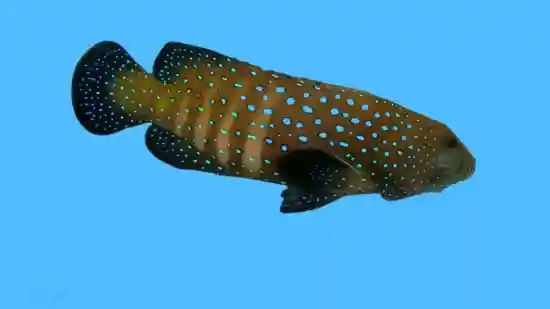
One Saltwaterfish.com reviewer of the Blue Spot Grouper shared: “Love this Blue Spot Grouper\! He is so beautiful and such an interesting personality\! He doesn't bother anyone and has actually become friends with our yellow wrasse\! They swim attached at the hip looking for food\! He is a very mellow swimmer who loves swimming through the rock work to find new caves. He is a little hard to feed when competing with quicker eaters, I let a couple pellets sink in front of him and sink a few spirulina flakes\! I highly recommend him, he is sweet, beautiful, and easy\!”
Bottom line: feed frozen marine foods as the standard. Live food is rarely necessary and usually creates more problems than it solves.
Yes, tank size is one of the most important parts of keeping a grouper successfully, and it’s the reason many “healthy juveniles” become problem fish later. Groupers are thick-bodied predators that grow quickly, produce heavy waste, and need horizontal swimming space to remain calm and stable long term.
The practical reasons groupers need big tanks:
adult size and mouth gape increase fast, turning “safe” fish into prey
bioload scales hard with meaty diets and messy feeding
small tanks create constant stress (which shows up as disease, lethargy, or dominance)
filtration needs are easier to meet with more water volume and footprint
A large tank doesn’t just make the grouper healthier, it makes the entire predator system more predictable.
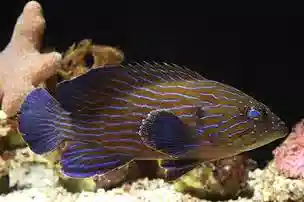
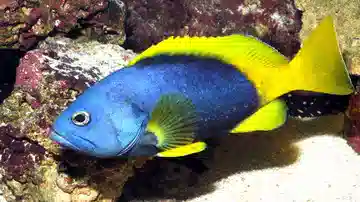
One Saltwaterfish.com reviewer of the Boenacki (Blueline) Grouper shared: “The Boenacki (Blueline) Grouper are great fish. They acclimated very well. They are always out and swimming around. Their color changes under my lighting. Fun to watch.”
Bottom line: groupers can be hardy, but they’re not small-tank fish. Proper tank size is what turns a grouper from a short-term novelty into a long-term centerpiece.
Groupers are not “aggressive bullies” in the classic sense, but they are dominant predators and that’s the distinction that matters for compatibility. Most grouper problems aren’t constant fighting; they’re predation events, feeding competition, and intimidation as the fish grows.
In well-sized systems, groupers often behave calmly toward fish that are too large to swallow. They don’t usually chase tank mates around the tank for sport. Instead, the risk comes from two predictable factors:
Anything that fits becomes food (even months later as the grouper grows)
Feeding time amplifies dominance in predator tanks, especially in smaller footprints
This is why many “peaceful” reports are true in the short term until size, growth, and feeding dynamics change the equation.
One Saltwaterfish.com reviewer of the Clown Grouper shared: “This is a great Clown Grouper \- South Asia who showed up healthy and happy. He was shy at first in my quarantine tank but after moving him over to the main tank he has been quite the showman. Beautiful fish to add to a reef tank.”
Bottom line: groupers aren’t aggressive like triggers or damsels, but they are predators that require conservative stocking. Choose tank mates based on adult size and swallow risk, and groupers are typically calm and predictable.
The best groupers for a saltwater aquarium are species that stay relatively manageable in size, adapt well to captivity, and display predictable behavior when housed in large, well-planned systems. While all groupers are predators and require significant space, some species are far more suitable for experienced home aquarists than others. Choosing the right grouper from the start is essential for long-term success.
Top grouper species for home saltwater aquariums:
Miniatus Grouper *(Cephalopholis miniata)
Often considered the gold standard for home aquariums.
Stunning red coloration with blue spots
Grows to \~16–18 inches
Hardy, bold, and adapts well to frozen foods
Best for 180–240+ gallon systems
Blue Line Grouper (Cephalopholis formosa)
A favorite for aquarists seeking color and personality.
Deep blue lines and strong contrast
Similar size to Miniatus
Active and highly visible
Excellent centerpiece for predator tanks
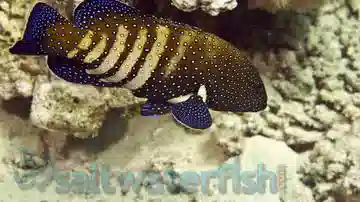
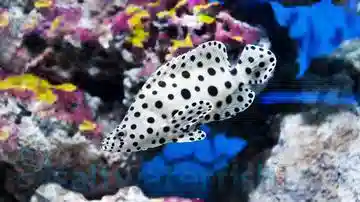
Panther Grouper (Cromileptes altivelis)
Extremely popular when young, but requires planning.
Dramatic juvenile patterning
Grows very large (24+ inches)
Best only for very large systems (300+ gallons)
Long-term commitment species
Coral Hind Grouper (Cephalopholis miniata relatives)
Smaller, reef-associated groupers that adapt well to captivity.
Manageable size compared to giant groupers
Hardy and less aggressive
Excellent choice for advanced hobbyists
What makes these groupers “best” for aquariums:
Accept frozen and prepared foods reliably
Display bold but predictable behavior
Adapt well to captive conditions
Offer striking coloration and presence
Groupers to avoid for most home aquariums:
Giant groupers (grow 4–8 feet)
Species requiring public-aquarium-scale systems
Poorly documented or rarely imported species
One Saltwaterfish.com reviewer of the Panther Grouper shared: “I've had my panther grouper about a year-and-a-half he's 6 in Long and doing great good job saltwater fish. Com”
Pro tips before choosing a grouper:
Always plan for adult size, not juvenile appearance
Choose tanks based on length and volume
Expect heavy feeding and strong filtration needs
Stock tank mates that are too large to be eaten
Groupers are best for FOWLR or predator tanks
Bottom line:
The best groupers for saltwater aquariums include Miniatus Groupers, Blue Line Groupers, Panther Groupers (with proper planning), and other medium-sized hind groupers. These species offer the ideal balance of beauty, durability, and personality when kept in large, predator-focused systems. For responsibly sourced, tank-conditioned groupers backed by Saltwaterfish.com’s 8-Day Live Guarantee, explore the Grouper Collection and choose a showpiece fish you can enjoy for years with confidence.
Groupers do not require unusual or exotic water parameters, but they do require stability, volume, and strong filtration to remain healthy long term. These large predatory fish are often described as hardy, and that’s true, but their size and feeding habits place higher demands on overall system quality than most reef fish. In short, groupers tolerate a normal marine range, but they thrive only when conditions are consistent and well-managed.
Recommended water parameters for groupers:
Temperature: 74–78°F
Salinity: 1.023–1.026 specific gravity
pH: 8.1–8.4
Ammonia & Nitrite: 0 ppm (non-negotiable)
Nitrate: Preferably under 30–40 ppm
Unlike sensitive SPS corals, groupers can tolerate moderately elevated nitrates, but chronic poor water quality shortens lifespan, increases disease risk, and leads to sluggish behavior.
Why stability matters more than exact numbers:
Groupers are large, muscular fish that produce heavy waste. Sudden swings in salinity, temperature, or oxygen levels cause stress far more quickly than being slightly outside an “ideal” range. Large tanks help buffer these changes, which is one reason smaller systems struggle with long-term grouper health.
Filtration and oxygenation are critical:
Oversized protein skimmers
Strong biological filtration (live rock, media)
High oxygen levels and surface agitation
Regular water changes
Poor filtration (not incorrect parameters) is the most common cause of grouper health issues.
One Saltwaterfish.com reviewer of the Lyretail Grouper shared: “The Lyretail Grouper was shipped extremely well, and it was a perfect addition to my reef tank. I acclimated according to the instructions, and I have had no problems with any of the fish I have received. What more can you ask for? Cheaper then my local fish store and it was delivered to my front door the next day.”
Pro tips for maintaining ideal conditions for groupers:
Use tanks with high water volume and length
Feed controlled portions to limit waste
Perform consistent water changes
Monitor oxygen levels, especially after feeding
Avoid overcrowding predator tanks
Bottom line:
Groupers don’t need special water parameters, but they do need stable, clean, well-oxygenated water in large systems. When housed in properly filtered aquariums with consistent conditions, groupers are extremely hardy and long-lived. For tank-conditioned groupers backed by Saltwaterfish.com’s 8-Day Live Guarantee, explore the Grouper Collection and build a predator tank designed for long-term success.
Yes, but multi-grouper setups are advanced and success depends more on tank footprint and species selection than on “luck.” Groupers are not schooling fish; they’re dominant predators that need space to avoid constant visual contact and feeding conflict.
Multi-grouper setups work best when:
the tank is genuinely large (long and wide matters as much as gallons)
groupers are similar in size and no individual can swallow another
introductions are done together (or the most dominant fish is added last)
feeding is controlled so one fish doesn’t monopolize food
Even in very large systems, groupers can become more competitive as they mature. What looks fine at 8 inches may change completely at 14–18 inches.
One Saltwaterfish.com reviewer of the Red V Tail Grouper shared: “An awesome little beautiful Red V Tail Grouper who peacefully explores my large reef tank's caves. Almost always visible and active.”
Pro tips for multi-grouper success:
Plan for adult size, not juvenile appearance
Choose species known to adapt well to captivity
Feed 2–3 times per week with generous but controlled portions
Provide open swimming space plus structure
- Monitor behavior closely as fish mature
Bottom line: keeping more than one grouper is possible, but it’s a big-tank, careful-combo project. For most home aquariums, a single grouper is the most responsible choice.
The best tank mates for groupers are fish that meet three requirements: too large to swallow, confident enough to compete, and compatible with predator-style feeding and filtration. Temperament matters, but size and body shape matter more.
Strong, commonly compatible categories include:
Large angelfish (bold, fast, and not easily intimidated)
Tangs/surgeonfish (speed \+ water column behavior keeps them out of trouble)
Some triggerfish (species-dependent; avoid overly aggressive triggers in tight tanks)
Large wrasses and hogfish (in the right tank size and structure)
Fish to avoid are the predictable losses:
anything small or slender-bodied
slow bottom-resters
“reef community” fish that can’t handle predator feeding competition
shrimp, crabs, snails, and most invertebrates
The safest approach is to build your stock list backward from the grouper’s adult size and mouth gape, because many failures happen months later, not day one.
Bottom line: groupers coexist best with large, fast, durable fish in spacious systems with strong filtration. If you plan around swallow risk and feeding dynamics, mixed predator communities can be stable and impressive.
Groupers are long-lived saltwater fish, and when housed properly, many species can live 15–30 years in captivity, with some documented cases exceeding that range in exceptionally large, well-maintained systems. Their lifespan is one of the most important factors to consider before purchasing a grouper, as they are not short-term display fish but long-term commitments best suited for experienced aquarists.
Typical captive lifespans by grouper type:
Miniatus Grouper (Cephalopholis miniata): 15–20+ years
Blue Line Grouper *(Cephalopholis formosa): 15–20 years
Panther Grouper *(Cromileptes altivelis): 20–30+ years
Other hind groupers: Commonly 15–25 years
These long lifespans are achievable because captive groupers are protected from predators, receive consistent nutrition, and live in controlled environments, provided their tank size and filtration are appropriate.
What most affects a grouper’s lifespan in an aquarium:
Tank size and growth planning
Undersized tanks are the leading cause of shortened lifespans. Groupers grow steadily and require large, long tanks to avoid chronic stress and organ damage.
Water quality and filtration
Because groupers are heavy eaters and messy feeders, long-term success depends on oversized filtration, stable parameters, and consistent maintenance.
Proper feeding habits
Overfeeding shortens lifespan. Groupers thrive on 2–3 controlled feedings per week using marine-based foods like shrimp, squid, and silversides.
Compatible tank mates
Stress from constant competition or incompatible fish reduces longevity, even if no visible aggression occurs.
Pro tips for maximizing grouper lifespan:
Plan for adult size before purchase
Upgrade tanks early, not reactively
Maintain excellent oxygenation
Avoid overcrowding predator systems
- Feed quality foods in controlled portions
Bottom line:
Groupers are exceptionally long-lived fish, often thriving for 15–30+ years in captivity when housed in large, stable, well-filtered systems. They are best suited for aquarists ready to commit to long-term care and proper planning. For responsibly sourced, tank-conditioned groupers backed by Saltwaterfish.com’s 8-Day Live Guarantee, explore the Grouper Collection and invest confidently in a predator you can enjoy for decades.