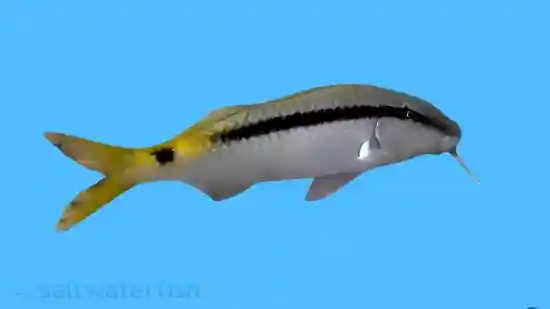
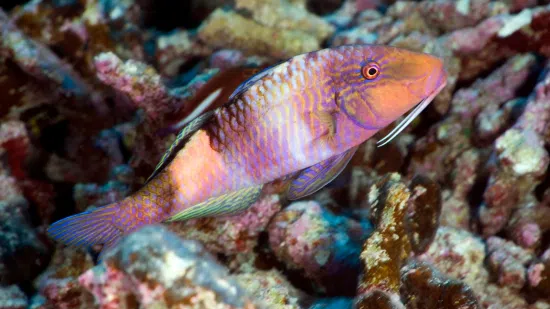
Goatfish In Saltwater Aquariums: FAQ
Goatfish are not reef safe, even though they don’t eat coral tissue directly. The reason isn’t aggression, it’s behavior. Goatfish are constant sand-sifting foragers, and that natural feeding style conflicts with how reef tanks function.
In reef aquariums, goatfish use their chin barbels to dig through the substrate all day. This regularly results in sand being dumped onto corals, frags being buried, and carefully arranged aquascapes becoming unstable. Over time, this causes coral irritation, recession, and constant maintenance headaches.
Goatfish also prey heavily on sand-dwelling life. Shrimp, snails, hermit crabs, worms, and microfauna are all part of their natural diet, which means cleanup crews rarely survive long term. Even if a goatfish appears “well behaved” early on, losses are almost inevitable as the fish grows.
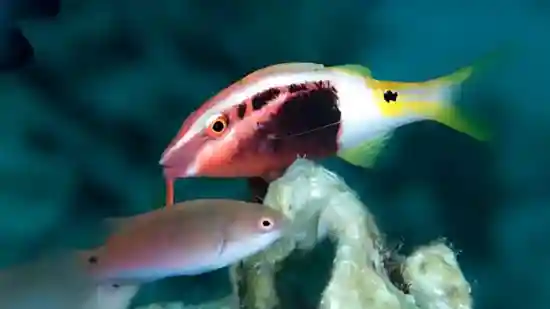
One Saltwaterfish.com reviewer of the Bicolor Goatfish shared: “This is a great Bicolor Goatfish who showed up healthy and happy. He was shy at first in my quarantine tank but after moving him over to the main tank he has been quite the showman. Beautiful fish to add to a reef tank.”
Bottom line: goatfish don’t belong in mixed reef tanks. They thrive in large FOWLR or predator systems where sand movement and invertebrate loss are expected, not problematic.
Goatfish are active carnivorous foragers that require a meaty, protein-rich diet in captivity to stay healthy and maintain their constant activity levels. In the wild, goatfish use their distinctive chin barbels to sift through sand and rubble, hunting small crustaceans, worms, and benthic invertebrates. In a home aquarium, their diet should closely replicate this natural feeding behavior while being nutritionally balanced and easy to manage.
Best foods for goatfish in captivity:
Frozen meaty foods (primary diet)
Frozen foods should make up the bulk of a goatfish’s diet and are readily accepted once the fish is established.
Mysis shrimp
Chopped shrimp (raw, marine-sourced)
Clams, scallops, or mussels
Squid and marine fish flesh
These foods provide the protein and fats goatfish need to fuel their nonstop movement.
Prepared foods (supplemental but useful)
Many goatfish learn to accept prepared foods, especially in well-established systems.
Sinking marine pellets
Soft carnivore pellets
High-quality frozen blends
Prepared foods add convenience but should not fully replace whole meaty items.
Natural foraging (bonus nutrition)
In mature tanks with sandbeds, goatfish will also consume:
Copepods and amphipods
Small worms and microfauna
This natural grazing behavior is normal but should not be relied on as their sole food source.
Foods to avoid:
Flake-only diets
Freshwater feeder organisms
Plant-based or herbivore foods
How often should goatfish be fed?
1–2 times daily in moderate portions
Because goatfish are highly active, underfeeding can lead to weight loss and stress.
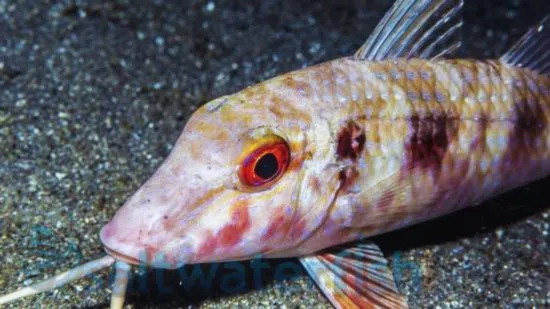
One Saltwaterfish.com reviewer of the Red Goatfish shared: “An awesome little beautiful Red Goatfish who peacefully explores my large reef tank's caves. Almost always visible and active.”
Pro feeding tips for goatfish:
Feed a varied diet to prevent deficiencies
Use sinking foods so they can forage naturally
Expect increased bioload: use strong filtration
- Secure rockwork, as feeding behavior can be energetic
Bottom line:
Goatfish thrive on a meaty diet of frozen marine foods, supplemented with sinking pellets and natural foraging from the sandbed. When fed properly and housed in large, stable systems, goatfish are hardy, engaging fish with fascinating feeding behavior. For responsibly sourced, tank-conditioned goatfish backed by Saltwaterfish.com’s 8-Day Live Guarantee, explore the Goatfish Collection and feed your aquarium with confidence.
Goatfish grow much larger than many hobbyists expect, and understanding their adult size is essential before adding one to a saltwater aquarium. In home aquariums, most commonly kept goatfish species reach 10–18 inches at full maturity, with some larger species exceeding that range in very large systems. While juveniles are often sold at just a few inches long, goatfish grow steadily and become large, powerful, constantly active fish.
Typical adult sizes of popular goatfish species:
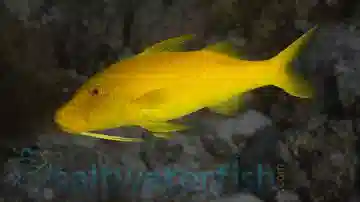
Yellow Goatfish (Mulloidichthys martinicus): \~12–14 inches
Blue-striped Goatfish *(Upeneus tragula): \~10–12 inches
Red Goatfish *(Parupeneus multifasciatus): 14–18+ inches
Large Parupeneus species: Can exceed 18 inches in spacious systems
Because goatfish are thick-bodied and highly mobile, their size impacts more than just tank volume, it affects aquascaping stability, filtration demands, and tankmate compatibility.
Why size matters with goatfish:
They require large tanks to swim and forage naturally
Their constant sand-sifting can destabilize rockwork as they grow
Larger bodies mean higher bioload and heavier feeding
Small tanks lead to stress, pacing, and shortened lifespan
Minimum tank size guidelines:
Juveniles: 125 gallons (short-term only)
Adults: 180–240+ gallons recommended
Long tanks with open swimming space and a deep sandbed are strongly preferred.
One Saltwaterfish.com reviewer of the Goldsaddle Goatfish shared: “Very nice reef fish. Goldsaddle Goatfish cleans detritus in the live rock. Doesn't intrude on the reef. Easy keeper.”
Pro tips for planning around goatfish size:
Plan for adult size, not store size
Secure rockwork firmly
Expect loss of small invertebrates
Oversize filtration from day one
Bottom line:
In home aquariums, goatfish typically grow 10–18+ inches, making them best suited for large, fish-only or FOWLR systems. With proper space and planning, they become hardy, energetic centerpiece fish. For responsibly sourced, tank-conditioned goatfish backed by Saltwaterfish.com’s 8-Day Live Guarantee, explore the Goatfish Collection and plan confidently for long-term success.
Goatfish are not aggressive fish, but they are often incompatible with community tanks due to their size, activity level, and feeding behavior. Problems attributed to “aggression” are usually the result of disruption and competition, not hostility.
Goatfish don’t chase or bully tank mates for territory. Instead, they spend nearly all their time foraging across the substrate. In community tanks, this leads to constant movement, sand storms, and feeding competition that overwhelms smaller or more passive fish.
As goatfish grow (often reaching 10–18+ inches) their presence alone can dominate a tank. Timid fish may become stressed, outcompeted for food, or displaced simply by the goatfish’s nonstop activity. Small bottom-dwelling fish and invertebrates are especially vulnerable.
Bottom line: goatfish aren’t aggressive bullies, but they’re poor fits for typical community tanks. In large FOWLR systems with robust, fast-moving tank mates, they are generally peaceful and highly engaging.
Goatfish are long-lived saltwater fish when kept in properly sized, well-maintained aquariums. In captivity, most goatfish species live 8–15 years, with some individuals reaching or even exceeding that range in large, stable systems. Their lifespan is often underestimated because they are frequently sold as small juveniles, but goatfish are not short-term aquarium fish. They are a serious, long-term commitment.
Typical captive lifespan of goatfish:
Most commonly kept goatfish species: 8–12 years
Larger Parupeneus and Mulloidichthys species: 12–15+ years
Poorly housed or undersized systems: Significantly shorter lifespan
With proper care, goatfish can rival many large angelfish and tangs in longevity.
What most affects a goatfish’s lifespan:
Tank size and swimming space
Goatfish are extremely active and grow large (often 10–18+ inches). Tanks that are too small lead to chronic stress, pacing, and early mortality.
Long, open tanks (180+ gallons) dramatically increase lifespan
Diet and feeding consistency
Goatfish burn a lot of energy and require regular, protein-rich meals.
Underfeeding leads to weight loss and weakened immunity
Overfeeding without filtration leads to poor water quality
Water quality and filtration
Because goatfish are messy eaters and constant foragers, strong filtration and consistent maintenance are critical for long-term health.
Stress from inappropriate tank mates
Housing goatfish with timid fish, small invertebrates, or in cramped community tanks often shortens lifespan due to constant stress and competition.
One Saltwaterfish.com reviewer of the (Fish Name Here) shared: “Review Here”
Pro tips to maximize goatfish lifespan:
Plan for adult size, not juvenile size
Feed 1–2 times daily with varied, meaty foods
Maintain a deep sandbed for natural foraging
Oversize filtration and perform regular water changes
- Choose robust tank mates
Bottom line:
Goatfish can live 8–15+ years in captivity when provided with large tanks, proper nutrition, and stable water quality. They are not beginner or short-term fish, but in the right FOWLR or predator system, goatfish become hardy, long-lived, and highly engaging residents. For responsibly sourced, tank-conditioned goatfish backed by Saltwaterfish.com’s 8-Day Live Guarantee, explore the Goatfish Collection and plan confidently for long-term success.
Yes, it is possible to keep more than one goatfish together, but it requires very large tank sizes, careful species selection, and realistic expectations. Goatfish are not aggressive predators, but they are large, extremely active, and competitive for food, which means multi-goatfish setups are only appropriate for advanced aquarists with ample space.
When keeping multiple goatfish can work:
Very large aquarium is essential
Tank size is the biggest factor in success.
Minimum: 240 gallons (bare minimum)
Recommended: 300–400+ gallons
Goatfish need long tanks with open swimming space and deep sandbeds to forage without constant competition.
Similar size and compatible species
Multiple goatfish do best when:
They are similar in size
Added to the tank at the same time
Not mixed with significantly smaller individuals
Large size differences often lead to food competition and stress.
Plenty of food and feeding space
Goatfish are energetic foragers. In multi-goatfish tanks:
Feed 1–2 times daily
Spread food across the tank
Use sinking foods so all individuals can eat
Underfeeding is a common cause of aggression and weight loss.
Deep sandbed and strong filtration
Multiple goatfish intensify sand-sifting and bioload.
Secure all rockwork
Expect heavy detritus movement
Oversized filtration is mandatory
When keeping multiple goatfish is NOT recommended:
Tanks under 240 gallons
Mixed reef aquariums
Systems with timid or bottom-dwelling fish
Tanks with limited swimming length
In smaller systems, goatfish may tolerate each other briefly as juveniles, but issues almost always develop as they mature.
One Saltwaterfish.com reviewer of the (Fish Name Here) shared: “Review Here”
Pro tips for multi-goatfish success:
Plan for adult size, not juvenile size
Introduce all goatfish at once
Maintain a large, open aquascape
Expect loss of small invertebrates
Monitor weight and feeding behavior closely
Bottom line:
Keeping more than one goatfish is possible, but only in very large, well-planned FOWLR or predator tanks. For most home aquariums, a single goatfish is the safest and most responsible choice. For responsibly sourced, tank-conditioned goatfish backed by Saltwaterfish.com’s 8-Day Live Guarantee, explore the Goatfish Collection and plan your system with confidence.
Goatfish are moderately difficult, not because they’re fragile, but because they demand space, planning, and commitment that many aquariums can’t provide.
The biggest challenge is tank size. Most goatfish grow 10–18+ inches and remain in constant motion. Tanks under 180 gallons lead to stress, pacing, and shortened lifespan, regardless of water quality.
Feeding is the second challenge. Goatfish are active carnivorous foragers that require regular, protein-rich meals. Underfeeding leads to rapid weight loss; overfeeding without strong filtration leads to water-quality issues.
Finally, compatibility limits their placement. Goatfish are not reef safe and will eliminate cleanup crews, which restricts them to FOWLR or predator systems.
Why goatfish are easier than expected in the right setup:
Very hardy once established
Adapt readily to frozen foods
- Disease resistant compared to delicate reef fish
Bottom line: goatfish aren’t hard fish, they’re demanding fish. In large, well-planned FOWLR systems, they are durable, long-lived, and rewarding.
The best tank mates for a goatfish are large, durable, fast-moving fish that can tolerate constant activity and won’t be viewed as food. Goatfish are not aggressive predators, but they are large, energetic bottom foragers that grow quickly and disrupt the substrate as part of their natural behavior. Because of this, compatibility is driven by size, resilience, and swimming ability, not temperament alone.
Ideal tank mates for goatfish:
Tangs and surgeonfish
Tangs are among the best companions for goatfish. They are fast, confident swimmers that occupy the water column and are largely unaffected by sand-sifting behavior.
Large angelfish
Both dwarf (in very large tanks) and full-sized angelfish do well with goatfish. Their confidence and size allow them to coexist without stress.
Triggerfish (species-dependent)
Triggers like Niger, Pinktail, or Bluejaw Triggers often pair well in FOWLR systems. Avoid overly aggressive triggers in smaller tanks.
Large wrasses
Robust wrasses that swim actively (such as Harlequin Tusks or large Halichoeres species) can tolerate goatfish movement and feeding competition.
Other large, hardy fish
In very large systems, suitable tank mates may include:
Hogfish
Snappers
Large rabbitfish
Tank mates to avoid:
Small or timid community fish
Bottom-dwelling or sand-sleeping species
Gobies, blennies, dartfish
Shrimp, crabs, snails, and cleanup crew
Delicate reef fish
Why tank size matters so much:
Goatfish commonly reach 10–18+ inches and are constantly active. In tanks under 180 gallons, even compatible tank mates can become stressed simply due to lack of space.
One Saltwaterfish.com reviewer of the (Fish Name Here) shared: “Review Here”
Pro tips for goatfish compatibility:
Plan tank mates based on adult size, not juvenile size
Provide long tanks with open swimming space
Secure rockwork firmly
Feed 1–2 times daily to reduce food competition
- Avoid mixed reef setups
Bottom line:
The best tank mates for goatfish are large tangs, angelfish, certain triggerfish, large wrasses, and other robust fish housed in spacious FOWLR or predator systems. With proper planning and realistic expectations, goatfish coexist peacefully and become dynamic centerpiece fish. For responsibly sourced, tank-conditioned goatfish backed by Saltwaterfish.com’s 8-Day Live Guarantee, explore the Goatfish Collection and build your system with confidence.
Goatfish are generally considered hardy, resilient saltwater fish, but their large size, constant activity, and heavy feeding requirements mean that health issues can arise if tank conditions or husbandry slip. The good news is that most goatfish diseases are preventable, and when problems do occur, early detection and proper treatment usually lead to full recovery.
Common health issues seen in goatfish:
Marine Ich (Cryptocaryon irritans)
White spots on body and fins
Scratching against sand or rock
Increased breathing rate
Prevention & treatment:
Quarantine new fish for 2–4 weeks
Maintain stable salinity and temperature
Treat in a separate quarantine tank using copper or alternative proven methods
Marine Velvet (Amyloodinium)
Dust-like coating on skin
Lethargy and rapid breathing
Rapid progression if untreated
Prevention & treatment:
Strict quarantine practices
Immediate isolation and treatment
Strong aeration during treatment
Bacterial infections (fin erosion, sores)
Frayed fins
Red or cloudy patches
Loss of appetite
Often linked to poor water quality or physical stress from undersized tanks.
Nutritional deficiencies
Because goatfish are very active, underfeeding can quickly lead to:
Weight loss
Weakened immune response
Increased disease susceptibility
Stress-related issues (most common)
Chronic stress is the leading cause of goatfish health problems and is usually caused by:
Tanks that are too small
Inadequate swimming space
Poor tank mate selection
Inconsistent feeding
One Saltwaterfish.com reviewer of the (Fish Name Here) shared: “Review Here”
Best practices for disease prevention in goatfish:
Use a large, open tank (180+ gallons recommended)
Quarantine all new arrivals
Feed 1–2 times daily with a varied, meaty diet
Oversize filtration and maintain stable water quality
Avoid overcrowding and timid tank mates
Pro tips for long-term goatfish health:
Monitor body weight regularly
Secure rockwork to prevent injury
Perform consistent water changes
- Observe feeding behavior daily: loss of appetite is an early warning sign
Bottom line:
Goatfish health issues are rare when proper tank size, nutrition, and water quality are maintained. Most problems stem from stress and undersized systems, not inherent fragility. With proactive prevention and early intervention, goatfish are durable, long-lived fish that thrive in large FOWLR aquariums. For responsibly sourced, tank-conditioned goatfish backed by Saltwaterfish.com’s 8-Day Live Guarantee, explore the Goatfish Collection and keep your aquarium thriving with confidence.
Goatfish are not true sand-bed cleaners, even though they constantly interact with the substrate. They stir sand aggressively while hunting for food, which can look helpful, but their impact is very different from traditional cleanup crew animals.
Goatfish do not eat detritus, algae, or waste. Instead, they consume worms, crustaceans, and microfauna living in the sand. Over time, this depletes beneficial sand-bed life rather than maintaining it.
In reef tanks, this behavior usually causes problems:
Sand buried corals and frags
Destabilized rockwork
Loss of cleanup crew
Increased nutrients from stirred waste
Where goatfish sand activity can be beneficial is in large FOWLR or predator systems with deep sandbeds, heavy feeding, and strong filtration. In those environments, their constant movement keeps sand visually clean and prevents compaction.
Bottom line: goatfish are excellent sand stirrers, not sand cleaners. They make sense in large FOWLR tanks, but they are usually disruptive in reef aquariums.